Bandarpoonch Peak Expedition
Conquer the mighty Bandarpoonch Peak (6,316 m / 20,722 ft), one of the most thrilling technical expeditions in the Garhwal Himalayas. This 14-day expedition takes…
Trip Snapshot
Expedition Overview
Route Story
About this Expedition
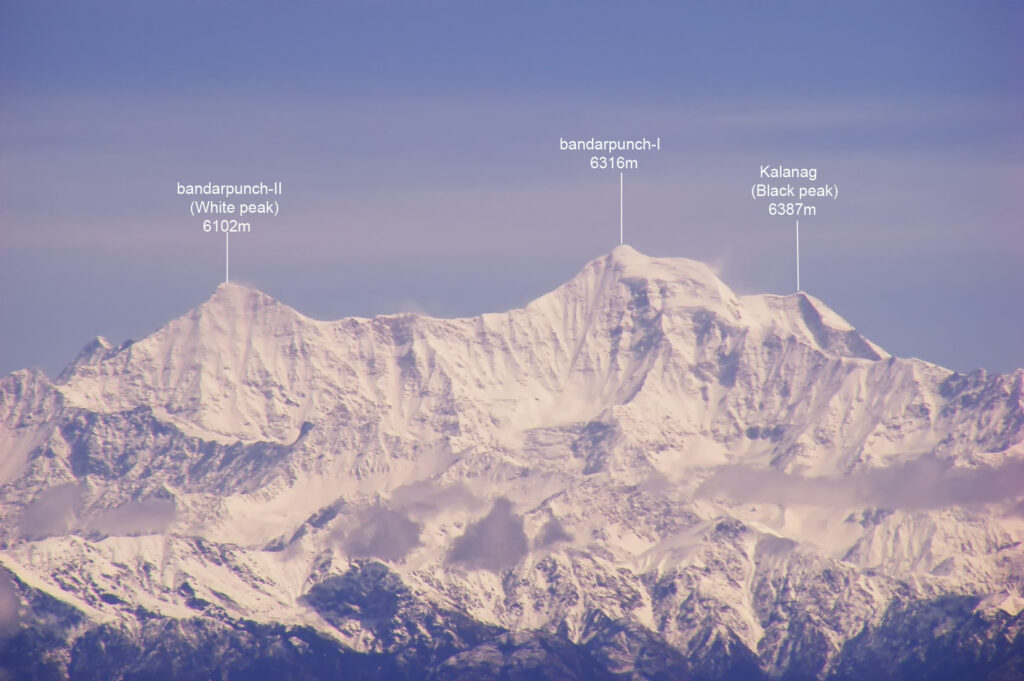
Conquer the mighty Bandarpoonch Peak (6,316 m / 20,722 ft), one of the most thrilling technical expeditions in the Garhwal Himalayas. This 14-day expedition takes you through pristine forests, across the challenging Khagi Pass, and up the rugged Chaiyaan glacier to the summit of Bandarpoonch — the second-highest peak in the Bandarpoonch Massif. With steep snow slopes, crevassed glacier terrain, and a demanding summit push, this expedition is designed for experienced trekkers and aspiring mountaineers seeking their next high-altitude challenge.
Looking for more high-altitude challenges? Explore our other expeditions: Kalindi Pass Trek, Kedartal Trek, and the Gangotri Glacier Trek.
Bandarpoonch Peak Expedition — Quick Facts
| Attribute | Details |
|---|---|
| Maximum Altitude | 6,316 m (20,722 ft) at Bandaroonch Summit |
| Total Duration | 14 Days / 13 Nights |
| Difficulty | Technical Expedition (Ice Axe + Crampons + Roped Glacier Travel) |
| Region | Uttarkashi, Uttarakhand, India |
| Starting Point | Sukhi Village (2,500 m) |
| Best Season | May–June (Pre-monsoon) & September–October (Post-monsoon) |
| Technical Gear Required | Ice axe, crampons, helmet, harness, rope, jumar, prusik cord |
| Permits Required | Forest Department Permit + IMF Expedition Permit |
| Prior Experience | Mandatory — previous high-altitude trekking (5,000 m+) required |
Why Choose the Bandarpoonch Peak Expedition?
- Technical Summit Ascent: Navigate steep snow slopes, crevassed glaciers, and a thrilling summit ridge to stand atop the 6,316 m Bandarpoonch Peak.
- Panoramic Himalayan Vistas: Witness breathtaking views of Bandarpoonch I, Swargarohini, Gangotri Massif, and the Yamunotri ranges from the summit.
- Remote & Pristine Trail: The route via Sukhi Village and Khagi Pass offers untouched forests, alpine meadows, and solitude away from crowded trekking routes.
- Technical Mountaineering Experience: Use ice axe, crampons, ropes, and jumars under expert supervision — a perfect progression from high-altitude trekking to mountaineering.
- Expert-Led Expedition: Our certified expedition leaders bring years of Himalayan experience, ensuring safety and a high summit success rate.
Expedition Highlights
- Altitude Milestone: Climb to 6,316 m (20,722 ft) — a true mountaineering achievement.
- Khagi Pass Crossing: Traverse the scenic Khagi Pass (3,240 m) with panoramic valley views.
- Chaiyaan Glacier: Camp and train on the beautiful Chaiyaan Glacier at Base Camp.
- Multiple High Camps: Experience camping at Advanced Base Camp (4,500 m) and Summit Camp (5,150 m).
- Technical Summit Push: A challenging summit day with roped glacier travel, crevasse navigation, and steep snow climbing.
- Rich Biodiversity: The lower trail passes through dense forests of oak, rhododendron, and deodar with diverse Himalayan wildlife.
Itinerary
A well-paced 14-day expedition designed for proper acclimatization, with load ferry days, rest days, and contingency time for the summit push.
Quick Overview
- Day 1: Arrival at Uttarkashi — Expedition briefing and gear check
- Day 2: Uttarkashi to Sukhi — Trek to Forest Camp (2,780 m) via Khagi Pass
- Day 3: Forest Camp to Base Camp (3,780 m) — Camp set up at Chaiyaan Glacier
- Day 4: Rest and Acclimatization at Base Camp
- Day 5: Load Ferry to Advance Base Camp (4,500 m) — Return to Base Camp
- Day 6: Trek to Advance Base Camp — Camp set up at ABC
- Day 7: Load Ferry to Camp 1 / Summit Camp (5,150 m) — Return to ABC
- Day 8: Trek to Camp 1 (Summit Camp) — Permanent shift
- Day 9: Summit Attempt — Bandarpoonch Peak (6,316 m)
- Day 10: Reserve Day for Summit Attempt
- Day 11: Return to Base Camp from Camp 1
- Day 12: Rest at Base Camp
- Day 13: Return to Forest Camp via Khagi Pass
- Day 14: Return to Sukhi — Drive to Uttarkashi / Dehradun / Delhi
Detailed Itinerary
Day 1: Arrival at Uttarkashi — Expedition Briefing
Arrive at the sacred town of Uttarkashi (1,158 m), the gateway to the Garhwal Himalayas. Check into your guesthouse and attend the evening expedition briefing. Your lead guide will conduct a thorough gear check, distribute technical equipment (ice axe, crampons, harness), and provide an overview of the 14-day expedition. Meet your fellow expedition members and enjoy a hearty dinner. Overnight at the guesthouse in Uttarkashi.
Day 2: Drive to Sukhi & Trek to Forest Camp via Khagi Pass (2,780 m)
After an early breakfast, enjoy a scenic 2.5-hour drive from Uttarkashi to Sukhi Village (2,500 m). The trail begins at Sukhi, passing through charming apple orchards and small hamlets. The ascent to Khagi Pass (3,240 m) is steep but rewarding with panoramic valley views. Descend through dense forests of oak and rhododendron to reach the Forest Camp (2,780 m) near the Songad River. The campsite is nestled in a beautiful forest clearing with the sound of the river nearby. Duration: 4-5 hours trekking, 11 km.
Day 3: Forest Camp to Base Camp (3,780 m)
Today is a long but scenic day. Start with a gentle descent through the forest, followed by the convergence of the Son Gad and Chaiyaan Gad rivers. The trail then follows the Chaiyaan River upstream through enchanting meadows and dense forests. As the tree line ends, the Chaiyaan Glacier comes into view — a breathtaking sight. Set up Base Camp on the glacier moraine with views of the Bandarpoonch Massif towering above. Duration: 6-7 hours, 13 km.
Day 4: Rest and Acclimatization at Base Camp
A crucial rest day for acclimatization to the altitude (3,780 m). Your expedition leader will take you on a short acclimatization hike uphill from Base Camp to aid altitude adjustment. The afternoon includes technical training sessions — ice axe arrest techniques, crampon practice, harness familiarization, and rope skills. Rest, hydrate, and prepare your gear for the days ahead. Overnight at Base Camp.
Day 5: Load Ferry to Advance Base Camp (4,500 m) — Return to Base Camp
Today is a load ferry day to establish Advance Base Camp. Carry supplies and gear partway up the glacier to the designated ABC site at 4,500 m. This helps with both acclimatization and logistics. After caching the loads, descend back to Base Camp for the night. The trail involves moraine walking and gentle glacier terrain. Duration: 5-6 hours round trip.
Day 6: Trek to Advance Base Camp (4,500 m) — Camp Set Up
Permanently move to Advance Base Camp at 4,500 m. The route follows the load ferry trail from the previous day but now you carry your personal gear. The terrain becomes more rugged with glacier moraine and snow patches. Set up camp at ABC with stunning views of the upper glacier and the Bandarpoonch summit ridge. Duration: 4-5 hours, 6 km. Overnight at ABC.
Day 7: Load Ferry to Camp 1 / Summit Camp (5,150 m) — Return to ABC
Another load ferry day, this time to establish Camp 1 (Summit Camp) at 5,150 m. The route becomes steeper and more technical as you ascend the glacier. Crampons and ropes are essential. Cache supplies and equipment at the Summit Camp site and return to ABC for the night. This double-effort day aids acclimatization to the higher altitude. Duration: 6-7 hours round trip.
Day 8: Trek to Camp 1 — Summit Camp (5,150 m)
Permanently shift to Camp 1 at 5,150 m — the Summit Camp. The trail climbs steadily up the glacier with crevasses requiring careful negotiation. Roped travel is mandatory. Once at Camp 1, rest and hydrate. Your expedition leader will brief you on the summit plan and weather forecast. Prepare your summit kit for the big day ahead. Duration: 4-5 hours, 5 km. Overnight at Summit Camp.
Day 9: Summit Attempt — Bandaroonch Peak (6,316 m)
The big day! Start at 2:00 AM with headlamps for the summit push. The route ascends steep snow slopes, navigates around crevasses, and follows a narrow summit ridge. The climb is technically demanding with sections requiring jumar use on fixed ropes. After 6-8 hours of determined climbing, you reach the summit of Bandarpoonch Peak at 6,316 m (20,722 ft). The panoramic view from the top is indescribable — Bandarpoonch I, Swargarohini, Gangotri Massif, and the entire Yamunotri range spread before you. Celebrate your achievement, take photos, and begin the careful descent back to Camp 1. Total duration: 12-14 hours. Overnight at Summit Camp.
Day 10: Reserve Day for Summit Attempt
A contingency day reserved in case of bad weather, high winds, or additional acclimatization needs. If the summit was already achieved on Day 9, this day can be used for rest and a more relaxed descent. Your expedition leader will make the call based on conditions. Flexibility is key to safe mountaineering.
Day 11: Return to Base Camp from Camp 1
Begin the descent back to Base Camp (3,780 m). Carefully navigate the glacier, retracing your steps through ABC. The descent is physically easier but requires continued caution on crevassed terrain. Reach Base Camp by late afternoon, where a celebratory atmosphere awaits. Share summit stories around the campfire. Duration: 6-7 hours, 11 km.
Day 12: Rest at Base Camp
A well-earned rest day at Base Camp. Enjoy the beautiful surroundings of the Chaiyaan Glacier valley. This day allows your body to recover from the high altitude and summit effort. Photography, bird watching, and relaxation. Overnight at Base Camp.
Day 13: Return to Forest Camp (2,780 m)
Descend through the beautiful forest trail back to Forest Camp near the Songad River. Bid farewell to the Chaiyaan Glacier and enjoy the lush green landscapes as you drop altitude. The forest air feels rich and rejuvenating after days in the alpine zone. Duration: 5-6 hours, 13 km. Overnight at Forest Camp.
Day 14: Return to Sukhi & Drive to Uttarkashi — Departure
Final day of the expedition. The trail back to Sukhi Village involves climbing back over Khagi Pass — a final challenge. The steep ascent and descent test your legs one last time before reaching the village. From Sukhi, board your vehicle for the drive to Uttarkashi (2.5 hours). From Uttarkashi, continue to Dehradun, Rishikesh, or onward to Delhi. Expedition concludes with lifetime memories of standing atop the majestic Bandarpoonch Peak. Duration: 4-5 hours trek, then drive.
Expedition Guidelines
Before the Expedition:
- Physical Preparation: Start cardio training 2 months prior — running, cycling, and stair climbing. Practice carrying a 10-15 kg backpack uphill. Focus on leg strength and endurance.
- Medical Check: Consult your physician for a high-altitude fitness assessment. Carry prescribed medications for AMS if recommended.
- Gear Familiarity: Practice using crampons, ice axe, and harness before the expedition. Know how to self-arrest on snow slopes.
- Pack Essentials: 4-5 layers of clothing, waterproof jacket/pants, high-ankle trekking boots (crampon-compatible), gaiters, UV sunglasses, sunscreen, headlamp, and reusable water bottles.
- Inform Your Leader: Disclose any medical conditions, allergies, or medications to your expedition leader during the briefing.
During the Expedition:
- Stay Hydrated: Drink 3-4 litres of water daily. Add electrolyte powder to prevent dehydration at high altitude.
- Follow the Leader: Always follow your expedition leader’s instructions — especially on glacier terrain and during the summit push.
- Roped Travel: On glacier sections, you MUST remain roped to your teammates at all times. No exceptions.
- Watch for AMS: Symptoms of Acute Mountain Sickness include headache, nausea, dizziness, and loss of appetite. Report immediately — no shame in turning back.
- Leave No Trace: Carry out all waste. Use designated toilet tents. Protect the fragile Himalayan ecosystem.
- Pole Pace: Walk at a steady pace. Breathe in sync with your steps. Do not overtake the lead guide.
After the Expedition:
- Rest & Recovery: Take 2-3 days of complete rest after returning to lower altitude. Your body needs time to recover from the high-altitude effort.
- Health Check: If you feel unwell after the expedition, consult a doctor immediately.
- Share Feedback: Your feedback helps us improve. Share your experience and suggestions with our team.
- Stay Connected: Join our trekker community for future expeditions and updates.
Join Rope on Slope for the Ultimate Himalayan Expedition
The Bandarpoonch Peak Expedition is a true mountaineering milestone that will test your limits and reward you with unparalleled views from 6,316 m. With Rope on Slope’s expert guides, rigorous safety protocols, and decades of Himalayan experience, you are in the safest hands. Book your expedition today and stand atop one of the Garhwal Himalayas’ most magnificent peaks.
How to Reach
The expedition starts from Uttarkashi, with the trailhead at Sukhi Village. Here’s how to reach the starting point:
- By Air: Nearest airport is Jolly Grant Airport, Dehradun (170 km from Uttarkashi). Regular flights from Delhi take ~1 hour. We provide pickup from Dehradun airport.
- By Train: Nearest major railway station is Dehradun (170 km from Uttarkashi). Overnight trains from Delhi to Dehradun are convenient options. Alternatively, Rishikesh (150 km) is also well-connected.
- By Road: Scenic drive from Dehradun to Uttarkashi via Mussoorie (6-7 hours). Regular buses and taxis are available. We can arrange shared or private transfers from Dehradun/Rishikesh.
- Pickup Included: Pickup from Dehradun railway station/airport is included in the package. Departure drop to Dehradun on the final day is also covered.
Difficulty & Fitness Requirements
The Bandarpoonch Peak Expedition is rated as Difficult / Technical Expedition — suitable for experienced high-altitude trekkers with good fitness levels. This is NOT a trek for beginners.
Grading Criteria
| Criteria | Details |
|---|---|
| Grade | Challenging+ / Technical Expedition |
| Max Altitude | 6,316 m (20,722 ft) |
| Daily Trekking | 4-7 hours, 5-13 km per day |
| Terrain | Glacier, moraine, snow slopes, rocky trails, dense forest |
| Technical Gear | Ice axe, crampons, harness, ropes, jumar (all mandatory) |
| Prior Experience | Previous high-altitude trekking (5,000 m+) required; technical training provided on-site |
| Fitness Level | Excellent — must be able to run 5 km and carry 15 kg uphill |
| Acclimatization Days | 3 dedicated rest/acclimatization days built into itinerary |
Best Time to Visit & Weather
| Season | Months | Conditions |
|---|---|---|
| Pre-Monsoon | May — June | Best window. Stable snow, clear mornings, moderate temperatures. Optimal summit conditions. |
| Monsoon | July — August | Not recommended. Heavy rainfall, avalanche risk, trail damage. |
| Post-Monsoon | September — October | Second best window. Fresh snow possible. Clear skies, colder temperatures. |
| Winter | November — April | Closed. Heavy snow, extreme cold (-20°C), glacier impassable. |
Bandarpoonch Peak is accessible only during specific weather windows due to extreme high-altitude conditions:
Temperature Range: Daytime 5°C to 15°C | Nighttime -5°C to -15°C at higher camps. Wind chill can make it feel significantly colder above 5,000 m, with summit winds potentially exceeding 40 km/h.
Essential Packing & Gear List
This expedition requires specialized mountaineering gear. Here is a comprehensive checklist:
Technical Gear (Provided by Rope on Slope)
- Ice axe (technical grade)
- Crampons (step-in compatible with trekking boots)
- Climbing helmet
- Harness with locking carabiners
- Dynamic climbing rope (8-10 mm)
- Prusik cords & slings
- Jumar (ascender)
- Group first-aid kit with oxygen cylinder
- Satellite phone for emergency communication
- Walkie-talkies for team communication
Personal Gear (To Be Carried by You)
- Footwear: High-ankle waterproof trekking boots (crampon-compatible) + camp shoes/sandals
- Upper Body: Base layer (merino wool), mid-layer fleece, down jacket (rated to -15°C), waterproof shell jacket
- Lower Body: Thermal leggings, trekking pants (2 pairs), waterproof over-pants
- Accessories: UV-protection sunglasses (category 4), ski goggles, headlamp with extra batteries, trekking poles (2), gaiters, balaclava, warm gloves + waterproof over-gloves
- Backpack: 50-70 litre rucksack with rain cover + small daypack (20-30L) for summit push
- Sleep System: 4-season sleeping bag (rated to -15°C or lower), sleeping bag liner, inflatable sleeping pad
- Hydration: 2 x 1-litre water bottles + thermos flask for hot water
- Personal Items: Sunscreen SPF 50+, lip balm with SPF, wet wipes, hand sanitizer, personal toiletries, small towel
- Medical: Personal first-aid kit, prescribed medications, Diamox (if recommended), blister care kit
- Documents: Photo ID (original), medical insurance papers, 2 passport-size photos
Booking, Payment & Cancellation Policy
How to Book
- Click “BOOK NOW” on this page and fill in your details.
- Pay 25% advance to confirm your seat (non-refundable).
- Remaining 75% due 30 days before departure.
- Receive expedition kit — gear list, medical form, and detailed briefing via email.
- Attend pre-expedition briefing in Uttarkashi on Day 1 for final gear check and orientation.
Cancellation Policy
| Cancellation Period | Refund Amount |
|---|---|
| 60+ days before departure | 75% refund (minus advance) |
| 30-59 days before departure | 50% refund |
| 15-29 days before departure | 25% refund |
| 0-14 days before departure | No refund |
Similar Expeditions
If the Bandarpoonch Peak Expedition excites you, explore these other adventures from Rope on Slope:
- Kalindi Pass Trek — Cross the legendary 5,950 m pass connecting Gangotri to Badrinath.
- Kedartal Trek — Trek to the stunning Kedartal Lake at the base of the Thalay Sagar peak.
- Gangotri Glacier Trek — Explore the source of the Ganges at the magnificent Gangotri Glacier.
Coverage
What’s Included
- Professional expedition guide
- All meals during trek
- Tents & camping equipment
- Permits & fees
- First aid & oxygen
- Satellite phone
- Transportation Dehradun to Sukhi & return
- Porter/mule support for common gear
Check before booking
What’s Excluded
- Personal trekking gear
- Personal insurance
- Tips & gratuities
- Any accommodation in Dehradun
- Personal medication
- Additional porter for personal bag
Frequently Asked Questions (FAQ)
Yes, Dayara Bugyal is one of the best beginner-friendly treks in Uttarakhand. The trail is gradual, scenic, and suitable for first-time trekkers with basic fitness.
Trekkers should be able to walk 5–8 km comfortably and perform basic cardio exercises before joining a trek.
Spring (March–May), Summer (May–June), Post-Monsoon (September–November), and Winter (December–February) are considered the best trekking seasons.
No. Several Uttarakhand treks such as Dayara Bugyal are perfect for beginners and first-time trekkers.
Carry trekking shoes, warm layers, rain protection, sunglasses, sunscreen, water bottles, personal medicines, and a backpack.
Yes, children above 8 years can participate in selected beginner and family-friendly treks.
Some high-altitude treks may cause mild symptoms. Proper acclimatization, hydration, and guided trekking reduce risks significantly.
Absolutely. Many solo travelers join our group departures and trekking expeditions every season.
You can select your preferred trek, choose the departure date, and complete the booking through our website or by contacting our team.
Most packages include accommodation, meals during the trek, permits, guide services, camping equipment, and safety support.
Yes, advance booking is recommended, especially during peak trekking seasons and long weekends.
We accept UPI, bank transfers, credit cards, debit cards, and secure online payment gateways.
Yes, cancellations are processed according to our cancellation policy shared during booking.
You will receive confirmation through email and WhatsApp after successful payment.
Yes, required forest permits and trekking permissions are generally included in the package.
Yes, we organize customized private treks for families, friends, schools, colleges, and corporate groups.
Dayara Bugyal, Nag Tibba, Chopta Tungnath, and Deoban are among the most family-friendly treks in Uttarakhand.
Yes, provided they are medically fit and choose suitable trekking routes according to their fitness level.
Yes, we offer customized family trekking packages with comfortable accommodations and flexible itineraries.
Children above 8 years can comfortably join most beginner-friendly trekking programs.
Yes, family trek packages generally include homestays, guest houses, or camps depending on the trek route.
Yes, nutritious vegetarian meals are generally included throughout the trekking itinerary.
Yes, private departures can be arranged for families seeking a personalized trekking experience.
Yes, trekking shoes, jackets, backpacks, trekking poles, gaiters, and sleeping bags are available for rent.
You can rent trekking shoes, backpacks, down jackets, rain ponchos, trekking poles, gloves, and sleeping bags.
Yes, all rental equipment is inspected, cleaned, and sanitized before every trek departure.
Yes, advance reservations help ensure gear availability during peak trekking seasons.
Yes, complete trekking kits can be rented for beginners who do not own trekking equipment.
Yes, quality trekking shoes in multiple sizes are available for rent.
Rental charges vary depending on the equipment selected and trek duration.
Our treks prioritize safety through experienced trek leaders, verified accommodations, support staff, and organized group departures.
Yes, many women travelers join our group treks as solo participants and enjoy a safe trekking experience.
Several trekking departures include women trek leaders or female support staff.
Yes, campsites are selected carefully and managed by experienced trekking teams with safety protocols.
Yes, special women-focused trekking departures can be arranged based on group requirements.
We follow strict safety guidelines, provide experienced guides, first-aid support, emergency communication, and route monitoring.
Yes, women regularly complete challenging treks such as Gomukh Tapovan, Kedartal, Nandanvan, and Vasuki Tal with proper preparation.